Table of Contents
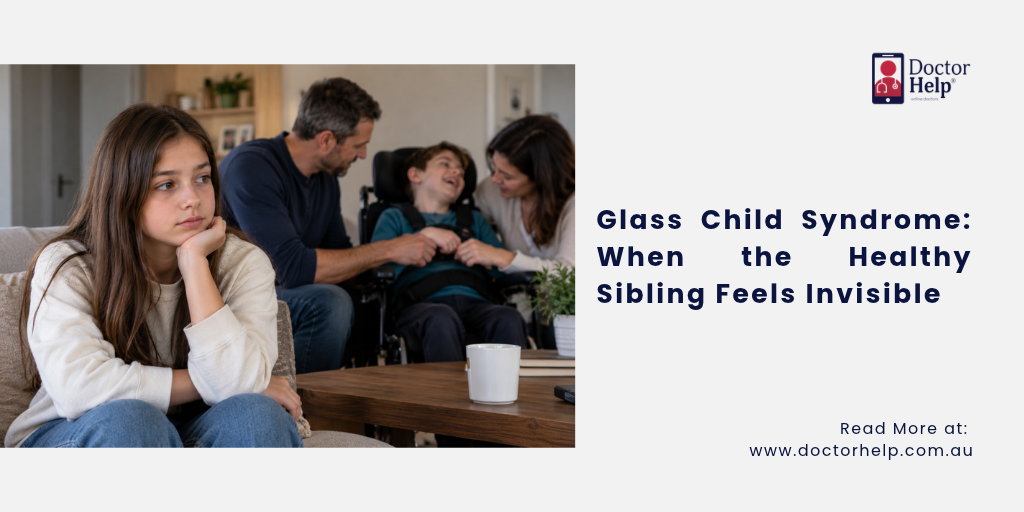
Growing up beside a sibling with serious illness, disability or significant mental health needs can create a strange kind of childhood. You may have loved your brother or sister deeply while also feeling that your own worries had to wait. Perhaps you became the easy child, the high achiever, the one who rarely asked for help. Years later, those habits can still shape how you handle emotions, relationships and stress. The phrase glass child syndrome has become a way of describing this experience of feeling overlooked while family attention understandably goes elsewhere. It is an informal term, not a diagnosis.
In this article, we explore what it can mean, what research says about siblings, and how support can make a difference.
What does glass child syndrome mean?
“Glass child” is an informal phrase used to describe a sibling who feels overlooked because much of a family’s time, energy and attention is focused on another child with disability, chronic illness or significant support needs.
The experience can be complicated. Some siblings develop strong bonds with their brother or sister and remember meaningful parts of their childhood alongside difficult moments. Others may remember feeling isolated, responsible or reluctant to add another worry to an already stretched household.
Australian research supports the idea that siblings can experience significant family stress. A 2019 Australian Institute of Family Studies article, based on a Siblings Australia mapping project, reported that 84% of adult sibling respondents said family stress had been an issue during childhood. The same project found that siblings could experience anxiety, depression, guilt and difficulty speaking up about their own needs. These findings describe experiences reported by participants rather than an inevitable outcome for every sibling.
Growing up with a sick sibling: what might happen emotionally?
Searching for “growing up with sick sibling psychology” often reflects a very personal question: why do certain habits still feel so automatic? A child living in a family under sustained pressure may learn to adapt in different ways. They might become unusually self-reliant, avoid asking for help, take on extra household responsibilities or become very aware of other people’s moods.
Australian sibling research has also identified feelings such as isolation, guilt, sadness, resentment and missing out on parental time or attention. Some adult siblings surveyed by Siblings Australia reported anxiety, depression, low self-esteem, lack of confidence and sleep difficulties. These findings can help explain why the experience deserves attention, while still leaving room for individual differences.
This does not mean having a sick or disabled sibling causes a particular mental health condition. Family relationships, personality, social support and many other circumstances can influence how someone responds to childhood stress.
Glass child symptoms in adults
There is not a recognised clinical checklist for “glass child symptoms adult”, because glass child syndrome is an informal concept rather than a diagnosed condition. Instead, some adults may recognise patterns such as:
- finding it uncomfortable to ask for help
- feeling guilty when personal needs take priority
- becoming highly self-reliant
- trying hard to keep other people happy
- minimising personal problems because someone else seems to have greater needs
- finding it difficult to identify or express emotions
- feeling responsible for keeping peace within relationships
- putting significant pressure on themselves to achieve
These experiences can also occur for many other reasons, including anxiety, stressful life events, family conflict, grief or other difficult experiences. They are not enough to establish a diagnosis by themselves. If these patterns are affecting work, relationships, sleep or day-to-day life, a conversation with a GP or mental health professional can help put them into context. Healthdirect recommends speaking with a doctor when mental health symptoms are affecting daily life.
Why can the experience be difficult to recognise?
Sometimes there is no single childhood moment that explains how you feel as an adult. It can be a collection of small experiences. A parent may have been at hospital appointments. Family routines may have revolved around a sibling’s needs. You may have learned that asking for something felt inconvenient, or that being “the good child” brought fewer complications.
That does not require blaming parents. Families caring for a child with disability or significant health needs can face considerable practical and emotional pressure. Australian family research also shows that sibling relationships can include positive experiences, closeness and support alongside stress.
Understanding both sides can be useful. You can care deeply about your family and still acknowledge that some of your own needs may have received less attention than you needed.
When might professional support help?
You do not need to identify yourself as a “glass child” before seeking support. A GP can listen to what is happening now, ask about your mental health and consider whether further assessment or referral could be useful. If appropriate, a doctor may develop a Mental Health Treatment Plan as part of the Better Access arrangements. Medicare rules can allow eligible people to claim rebates for up to 10 individual and 10 group mental health services in a calendar year, subject to eligibility and the applicable MBS requirements. A Mental Health Treatment Plan itself is not the same thing as the referral, and referral arrangements apply to Medicare-supported psychological services.
For people researching “online mental health referral Australia” options, telehealth may provide a convenient way to have a medical conversation when it is clinically suitable. Current Australian guidance also makes clear that telehealth has limits. A clinician may recommend an in-person assessment if a physical examination, procedure or more urgent assessment is needed. Telehealth should support safe clinical care rather than replace care that needs to happen face to face.
A genuine consultation is also important. Australian guidance supports real-time clinical assessment for telehealth care, rather than relying on a questionnaire completed without a consultation. Whether a service attracts a Medicare benefit depends on the person’s circumstances, practitioner eligibility and current MBS requirements.
When should you seek urgent help?
If you are experiencing thoughts of suicide or self-harm and feel unable to stay safe, seek urgent help. In an immediate emergency, call Triple Zero (000) or attend the nearest emergency department. Lifeline is also available on 13 11 14, 24 hours a day, 7 days a week, for crisis support.
For concerns that are distressing but not an immediate emergency, consider making a routine appointment with a GP or mental health professional. Symptoms such as persistent anxiety, low mood, sleep problems, withdrawal or difficulty functioning can be worth discussing, particularly when they are affecting everyday life.
A final thought for the sibling who learned to be “fine”
Being the sibling who needed less attention may have helped your family get through difficult periods. It does not mean your feelings were unimportant. You may recognise parts of your childhood in the glass child idea without adopting it as a label. The useful question may be less about what to call the experience and more about what you need now.
If you would like to talk about your symptoms, you can speak with an Australian doctor online to discuss your symptoms and suitable next steps. An assessment can help determine whether further mental health support or an in-person appointment may be appropriate.
Disclaimer: This article provides general health information and is not a substitute for individual medical advice, diagnosis or treatment. Mental health experiences vary from person to person. A qualified Australian health professional can assess your individual circumstances and discuss suitable next steps.
References:
- Australian Institute of Family Studies. (2019, April). Support needs of siblings of children with disability.
https://aifs.gov.au/resources/short-articles/support-needs-siblings-children-disability - Healthdirect Australia. (n.d.). Mental illness.
https://www.healthdirect.gov.au/conditions/mental-health-conditions/mental-illness - Healthdirect Australia. (n.d.). Stress symptoms.
https://www.healthdirect.gov.au/symptoms/stress - RACGP. (2026, May). Telehealth only services.
https://www.racgp.org.au/ - Services Australia. (n.d.). Mental health care and Medicare.
https://www.servicesaustralia.gov.au/mental-health-care-and-medicare?context=60092 - Siblings Australia. (2021). Siblings ILC Mapping Project report.
https://siblingsaustralia.org.au/wp-content/uploads/2021/10/48.-FINAL-Siblings-ILC-Mapping-Project-Report.pdf
Reviewed By: Dr. Momal Ahmad.