Table of Contents
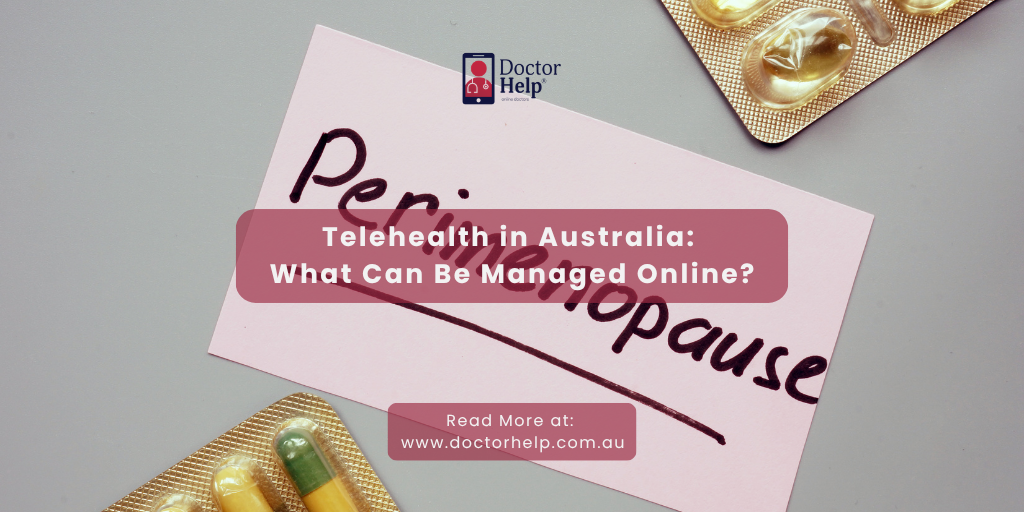
Somewhere between your late 30s and early 50s, your body may start sending mixed signals: a period that arrives early, a night sweat that wakes you at 3am, a wave of irritability that seems to come from nowhere. These shifts are often the first hints of perimenopause, the hormonal transition that leads up to menopause, and for many people they can feel confused before they feel familiar.
Recognising perimenopause symptoms in Australia is something GPs deal with often, precisely because the pattern rarely looks the same twice. Some people notice subtle changes over years, while others feel them more suddenly. Symptoms can affect everything from your sleep and mood to your energy and day-to-day wellbeing, and recognising these changes can be an important first step towards getting the right support. If things are starting to affect your daily life, it can be worth having that conversation sooner rather than later. Many people start by speaking with their regular GP, while others look for a perimenopause doctor in Australia through online services or women’s health clinics.
What Is Perimenopause?
Perimenopause is the stage leading up to menopause. Hormones fluctuate during this time, and periods can become irregular. Menopause is diagnosed after 12 months without a period.
Perimenopause commonly occurs during the 40s, although the timing varies from person to person. According to Healthdirect, it usually occurs between 45 and 55 and can last several years. Menopause happening before 40 is described as premature menopause and between 40-45 is regarded as early menopause.
The experience can be surprisingly individual. One person may notice changes in their menstrual cycle first. Another may be more troubled by night sweats or disrupted sleep. Someone else might initially notice changes in mood, concentration or sexual wellbeing. That variety is one reason there is no single checklist that perfectly describes every person’s experience.
The Australian Government’s current menopause guidance also emphasises that symptoms can overlap with other health conditions, ageing and life circumstances. In other words, it is possible for something to happen during perimenopause without necessarily being caused by perimenopause.
Common Perimenopause Symptoms
There is a broad range of possible symptoms, and not everyone experiences the same combination.
Common changes can include:
- Periods becoming irregular, shorter, longer, lighter, heavier or occasionally absent
- Hot flushes and night sweats
- Difficulty falling asleep or staying asleep
- Tiredness and reduced energy
- Mood changes, irritability or feeling more emotionally sensitive
- Anxiety or low mood
- Brain fog, forgetfulness or difficulty concentrating
- Muscle and joint aches
- Vaginal dryness
- Reduced sexual desire
- Breast tenderness
- Changes in skin
- Headaches or migraines
The Australian Government describes menopause-related symptoms as potentially physical, emotional and cognitive, with the intensity and duration varying considerably between people. Some people have little or no noticeable symptoms, while others find that symptoms interfere substantially with everyday life.
So if your experience does not look exactly like someone else’s, that does not necessarily mean something is wrong.
Hot Flushes, Mood and Sleep Changes: Why They Can Feel Connected
The combination of hot flushes, mood and sleep changes can be particularly frustrating. A night sweat can wake you repeatedly, leaving you exhausted the following day. Poor sleep can make it harder to concentrate and may leave you feeling more emotionally stretched. At the same time, changing hormones and other life factors may contribute to mood changes.
That does not mean every episode of anxiety, low mood or insomnia is caused by perimenopause. If changes in your mental health are persistent, worsening or beginning to affect your relationships, work, sleep or daily life, it is worth speaking with a doctor. Healthdirect recommends medical assessment when mental health symptoms last more than two weeks, become worse or interfere with everyday life.
You deserve to have those symptoms taken seriously rather than simply being told to “ride it out”.
How Is Perimenopause Diagnosed?
For many people, there is no single test that needs to be done to establish that they are going through perimenopause. A doctor will usually consider the bigger picture, including your age, menstrual pattern, symptoms and medical history. They may enquire when your symptoms began, changes in your periods and whether the changes are affecting your sleep, mood or daily life.
Blood tests are not routinely needed for everyone. However, testing may be appropriate in some circumstances, particularly when someone is younger than 45 or when another health condition needs to be considered. In people under 45, doctors may use blood tests (such as FSH) as part of assessing possible early menopause, alongside symptoms and history.
Your doctor may also suggest other tests depending on your symptoms. For example, blood tests can sometimes help investigate conditions such as thyroid problems or low iron when those are possible explanations for what you are experiencing. The important point is that testing should be guided by your individual circumstances rather than a one-size-fits-all checklist.
When Should You Speak with a Doctor?
You do not have to wait until your symptoms become unbearable. A routine appointment with a GP or other qualified doctor may be worthwhile if:
- your symptoms are affecting your sleep or energy
- changes in mood are becoming difficult to manage
- hot flushes or night sweats are interfering with everyday life
- your periods have changed significantly
- vaginal or sexual symptoms are uncomfortable
- you are unsure whether your symptoms are related to perimenopause
- symptoms are affecting work, relationships or general wellbeing
- you simply want help understanding what is happening.
The Australian Government advises speaking with a doctor when menopause-related symptoms are affecting your quality of life or causing concern. It also stresses that other health conditions can cause similar symptoms, making an accurate assessment important.
Sometimes, getting an explanation is reassuring in itself. Other times, an appointment can uncover something that needs separate attention. Either way, you do not need to have everything figured out before you ask for help.
Read: Relation of Menopause With Bone Health In Women
What Might Your Doctor Discuss?
Treatment is not automatically necessary just because you are experiencing perimenopause. The right approach depends on your symptoms, preferences, medical history and individual circumstances.
Depending on what you are experiencing, your doctor may discuss lifestyle and behavioural strategies, mental health support, non-hormonal treatments or menopausal hormone therapy (MHT).
MHT can help some people with symptoms such as hot flushes, night sweats and sleep problems, but it is not suitable for everyone. Your doctor can consider your medical history, symptoms and individual risk factors before discussing whether it may be appropriate for you.
There are also non-hormonal options for people who prefer not to use MHT or for whom hormonal treatment may not be appropriate. The goal is not to find a treatment that sounds best on paper. It is to find an approach that makes sense for your particular situation.
When Bleeding Needs Medical Attention
Changes in bleeding are common during perimenopause, but they should not all be dismissed as hormonal.
Speak with a doctor if you experience bleeding that is unusually heavy or prolonged, bleeding between periods, or bleeding after sex. Bleeding after you have gone 12 months without a period also needs medical assessment. It is advised that abnormal bleeding should be checked by a doctor.
Heavy blood loss can also contribute to low iron and tiredness, so it is worth mentioning significant changes in bleeding rather than simply putting them down to perimenopause.
When Should You Seek Urgent Care?
Most perimenopause symptoms can be discussed during a routine medical appointment, provided there are no concerning features. However, some symptoms should not be attributed to perimenopause without assessment. Seek urgent medical attention if you experience symptoms such as:
- chest pain
- difficulty breathing
- fainting or loss of consciousness
- sudden or severe pain
- very heavy bleeding, particularly if you feel weak, dizzy or unwell
- another symptom that feels sudden, severe or medically concerning.
If you are unsure how urgent a symptom may be, seek appropriate medical advice rather than relying on an online article to decide.
Can Telehealth Help with Perimenopause Symptoms?
An online consultation can be a convenient way to discuss symptoms with a doctor, particularly if getting to a clinic is difficult.
A doctor may be able to talk through your symptoms, medical history and treatment options during a telehealth appointment. Depending on what you describe, however, you may still need an in-person assessment, examination or further testing. Telehealth is therefore not a replacement for every type of medical care. Whether it is appropriate depends on your symptoms and clinical circumstances.
If medication is discussed, the decision to prescribe or continue treatment remains a clinical decision made by the doctor during an appropriate consultation.
A Final Word
Perimenopause can be an oddly emotional experience. There may be relief when the pieces finally start to make sense, frustration when they do not, and sometimes a quiet worry that the changes are simply something you are expected to tolerate.
You are not expected to work it all out alone. If your symptoms are affecting your quality of life, or you are simply unsure whether what you are experiencing could be related to perimenopause, speaking with a doctor can help you understand what is happening and what options may be available.
If you are looking for an online Australian doctor to discuss perimenopause symptoms, you can book an online consultation with Doctor Help.
Disclaimer: This article provides general health information and is not a substitute for individual medical advice, diagnosis or treatment. Speak with a qualified healthcare professional about your own symptoms and circumstances. If you experience chest pain, difficulty breathing, fainting, sudden severe pain or very heavy bleeding with significant symptoms, seek urgent medical attention.
References:
- Fact Sheet – Managing Menopause-related Symptoms. (2026, May 22). Australian Government Department of Health.
https://www.health.gov.au/perimenopause/resources/publications/fact-sheet-managing-menopause-related-symptoms?language=en - Healthdirect Australia. (n.d.-a). Mental health and menopause | Healthdirect.
https://www.healthdirect.gov.au/mental-health-and-menopause - Healthdirect Australia. (n.d.-c). Perimenopause. Healthdirect.
https://www.healthdirect.gov.au/perimenopause - Healthdirect Australia. (2024, May 10). How will I know if I’m going through perimenopause? healthdirect.
https://www.healthdirect.gov.au/blog/how-will-i-know-if-im-going-through-perimenopause - Jean Hailes. (2026, September 11). Menopause: Symptoms, causes and management | Jean Hailes.
https://www.jeanhailes.org.au/health-topics/menopause/ - Ask Jean Hailes about menopause. (2023, November 3). Jean Hailes.
https://www.jeanhailes.org.au/articles/menopause-ask-jean-hailes - Symptoms | Menopause and perimenopause. (2026, May 26). Australian Government Department of Health.
https://www.health.gov.au/perimenopause/understanding/symptoms?language=en
Reviewed By: Dr. Momal Ahmad.