Table of Contents
Choosing a new primary care doctor should not feel like choosing a random name from a list.
But for many patients, that is exactly what happens.
They move suburbs. Their old doctor retires. The clinic stops bulk billing. The next available appointment is three weeks away. Suddenly, they are scrolling through clinic websites, reading short doctor bios, comparing opening hours and trying to work out who they can trust with their health.
It is not a small decision.
A good primary care doctor is not just someone who treats a sore throat. They notice patterns. They remember your history. They pick up early warning signs. They help coordinate referrals, prescriptions, blood tests, chronic disease care and preventive screening.
In other words, they become the person who sees the whole picture.
Before choosing a new primary care specialist, patients should ask better questions than “Who is closest?” or “Who has the earliest appointment?”
Here are five that matter.
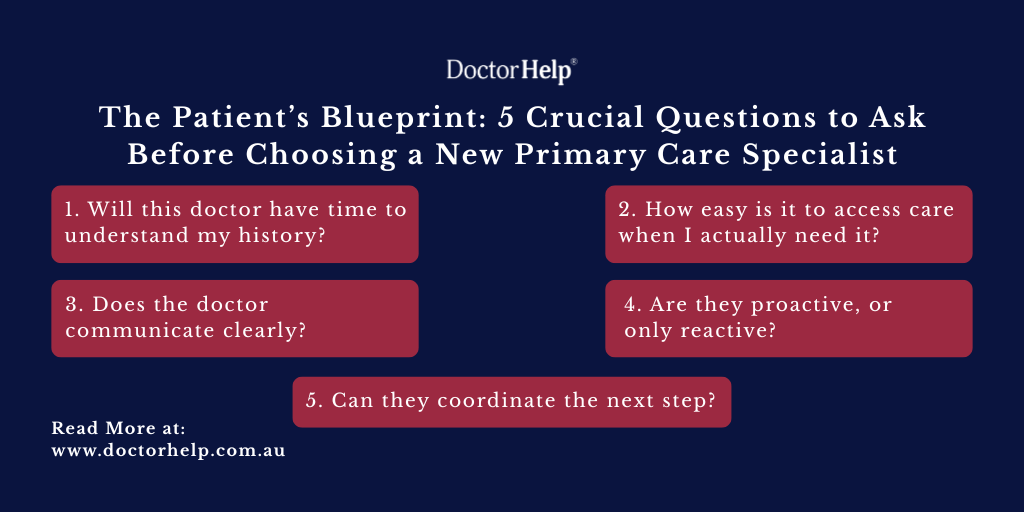
1. Will this doctor have time to understand my history?
A rushed appointment can be fine for a simple issue.
A repeat script. A mild rash. A short certificate.
But primary care works best when the doctor understands the person behind the symptoms.
Your family history matters. Your medications matter. Your work stress matters. So do previous surgeries, allergies, mental health, sleep, blood pressure, weight changes, menstrual history, smoking, alcohol, and the reason you have avoided doctors for the past five years.
A good primary care relationship is built on context.
That does not mean every appointment needs to be long. It means the doctor should be willing to build a proper baseline over time.
Before choosing a clinic, look for signs that they support continuity. Can you rebook with the same doctor? Do they manage chronic conditions? Do they offer preventive health checks? Do they explain follow-up clearly?
If every appointment feels like starting from zero, something is missing.
2. How easy is it to access care when I actually need it?
A great doctor is not much help if you can never get an appointment.
Access matters.
Not only in emergencies, but in ordinary moments: the child wakes with a fever, a medication runs out, a cough will not settle, you need a medical certificate, your blood pressure has been high, or a blood test result needs explaining.
Patients should ask:
How long is the usual wait?
Are same-day appointments available?
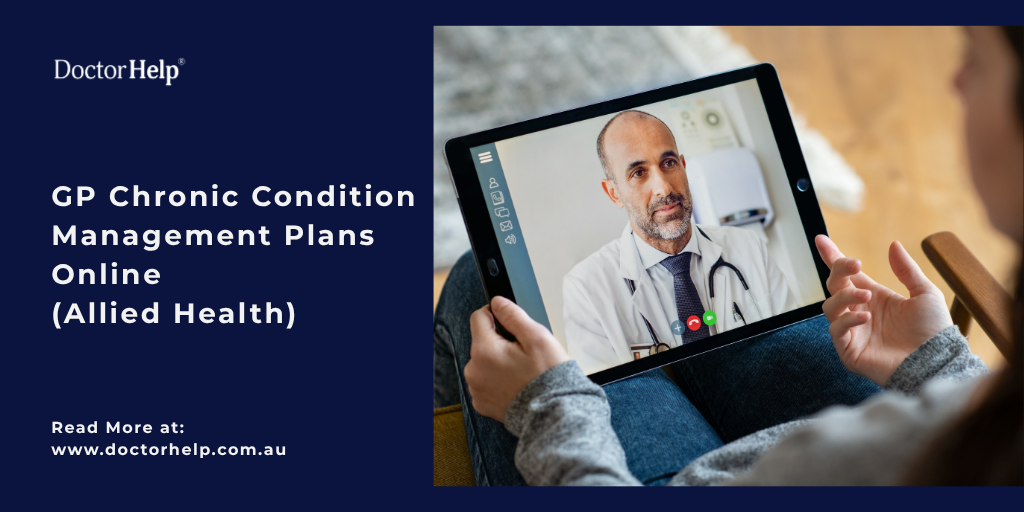
Does the clinic offer telehealth when appropriate?
Can prescriptions, referrals or certificates be handled efficiently?
Is there after-hours support?
What happens if your usual doctor is away?
This is where digital care can help fill gaps. An online doctor consultation does not replace the value of a long-term primary care relationship, but it can provide practical support when the issue is suitable for telehealth and waiting weeks is not realistic.
The strongest healthcare model is not online versus in-person.
It is having the right option at the right time.
3. Does the doctor communicate clearly?
Patients often remember how a doctor made them feel more than the exact wording of the diagnosis.
Did they listen?
Did they explain?
Did they rush?
Did they make you feel silly for asking?
Did they give you a plan?
Clear communication is not a soft skill. It is a safety issue.
A patient who understands their diagnosis is more likely to follow treatment. A patient who understands medication risks is more likely to use it correctly. A patient who knows when to seek urgent care is less likely to wait too long.
A good primary care doctor should be able to say:
Here is what I think is happening.
Here is what else we need to rule out.
Here is the plan.
Here is when to come back.
Here is when not to wait.
That kind of clarity builds trust.
4. Are they proactive, or only reactive?
Some healthcare is reactive by nature. You feel sick, then you book.
But good primary care should also be preventive.
That means checking blood pressure before it becomes a crisis. Looking at cholesterol before a heart event. Screening for diabetes risk. Reviewing medications. Asking about mood. Following up abnormal results. Reminding patients about cervical screening, bowel screening, vaccinations or skin checks where relevant.
A doctor who only responds to the symptom in front of them may miss the larger pattern.
Patients should look for a practitioner who thinks beyond today’s complaint.
If you come in for fatigue, do they ask about sleep, iron, thyroid, mood, medications and blood sugar?
If you come in for weight gain, do they ask about PCOS, insulin resistance, menopause, stress and sleep?
If you come in for a repeat prescription, do they check whether the medication is still working safely?
That is the difference between transaction and care.
5. Can they coordinate the next step?
Primary care is often the front door to the rest of the healthcare system.
A good doctor does not need to do everything themselves. But they should know how to guide the next step.
That might mean ordering blood tests, arranging imaging, writing a referral, reviewing specialist letters, monitoring chronic conditions or helping patients understand what to do after a hospital visit.
Patients should ask whether the clinic has reliable systems for:
pathology referrals
radiology requests
specialist referrals
prescription management
result follow-up
care plans
mental health support
chronic disease monitoring
Healthcare becomes stressful when patients are left to connect every dot alone.
A good primary care doctor helps reduce that confusion.
The role of telehealth in primary care decisions
Telehealth has changed what patients expect from healthcare.
People now know that not every issue requires a waiting room. Some consultations can be handled safely and efficiently online, especially when the doctor can take a history, review symptoms, provide advice, issue a prescription where appropriate, or arrange pathology or referrals.
Australian platforms such as Doctor Help have grown because patients want accessible, practical care for everyday health needs. For suitable concerns, telehealth can reduce travel, time off work and delays.
But telehealth should be used properly.
It works best when it is clinically appropriate, when the doctor has enough information to assess the patient, and when there is a clear pathway for in-person care if needed.
Patients should not have to choose between convenience and safety.
They should expect both.
Choosing a doctor is really choosing a system
A primary care doctor is important.
But the system around the doctor matters too.
Booking process. Follow-up. Result handling. Communication. Telehealth availability. Referral pathways. Fees. Accessibility. Privacy. Continuity.
All of these shape the patient experience.
Before choosing a new primary care specialist, ask the five questions:
Will they understand my history?
Can I access care when I need it?
Do they communicate clearly?
Are they proactive, not just reactive?
Can they coordinate the next step?
The best doctor-patient relationships are not built in one appointment. They are built through trust, clarity and follow-through.
And when those pieces are in place, primary care becomes more than a place you go when something is wrong.
It becomes the part of healthcare that helps keep everything else from falling through the cracks.
Reviewed By: Dr. Momal Ahmad.