Table of Contents
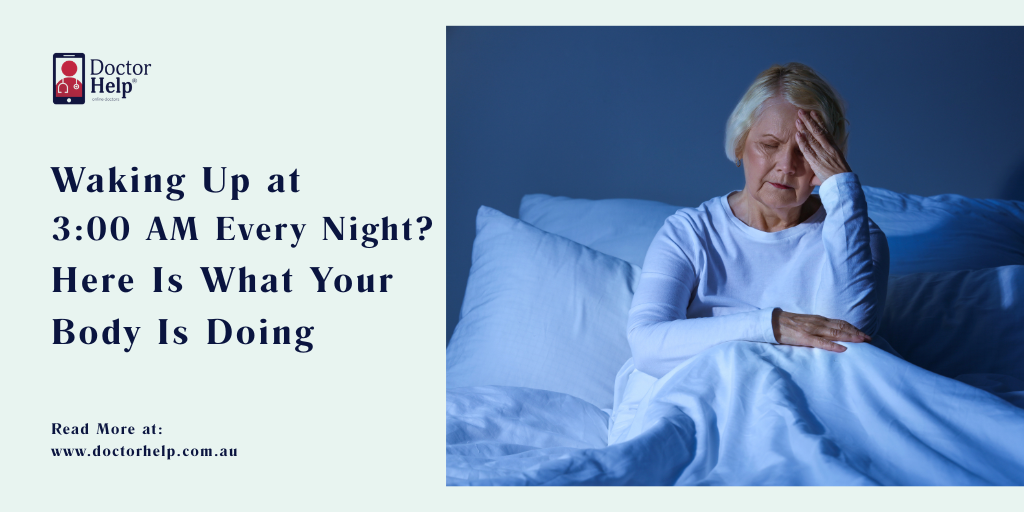
There is something strangely specific about the 3:00 AM wake-up.
You fall asleep fine.
Maybe even quickly.
Then, for no clear reason, your eyes open in the dark. You check the time.
3:07 AM.
Again.
Your heart is beating faster than it should. Your mind switches on too quickly. One thought becomes five. You start thinking about work, money, messages you forgot to reply to, something awkward you said three days ago, or absolutely nothing useful at all.
You are tired, but suddenly alert.
Not awake in a calm way.
Awake in a “why is my body doing this?” way.
And the worst part is that once it happens a few nights in a row, you start expecting it. You go to bed already worried you will wake up again, and that worry becomes part of the pattern.
So what is actually happening?
The answer is not always simple. But one thing is clear: waking at 3:00 AM is not always just “bad sleep”. Sometimes your body is responding to stress, blood sugar changes, hormones, alcohol, sleep apnoea, anxiety, reflux, medication, or a sleep rhythm that has been pushed out of balance.
First, waking during the night is not always abnormal
This is important.
Humans do not sleep like machines.
Most people wake briefly during the night. Often we do not remember it. We roll over, adjust the blanket, drift back off.
That is normal.
The problem is not waking once.
The problem is waking fully, feeling wired, and being unable to fall back asleep. Especially when it keeps happening around the same time and starts affecting your day.
That is usually called sleep maintenance insomnia — you can fall asleep, but staying asleep is the issue.
And for many people, 3:00 AM becomes the hour their body seems to press the alarm button.
The blood sugar theory: why your body may jolt you awake
One possible reason some people wake suddenly during the night is a drop in blood sugar.
Your brain needs a steady supply of glucose. If blood sugar drops too low during sleep, the body has backup systems to protect you. It can release stress hormones such as adrenaline and cortisol to help raise blood sugar again.
That response can feel like a sudden wake-up.
Racing heart.
Sweating.
Restlessness.
Anxiety out of nowhere.
A wired feeling that does not match how tired you are.
This is sometimes discussed in relation to nocturnal hypoglycaemia, especially in people with diabetes or people taking glucose-lowering medication. But even outside diabetes, some people notice their sleep is affected by long gaps without food, alcohol, very high-sugar dinners, late-night snacking patterns, intense exercise, or unstable eating routines.
That does not mean every 3:00 AM wake-up is low blood sugar.
It is one possible piece of the puzzle.
But if you wake up shaky, sweaty, hungry, anxious or with a pounding heart, and especially if you have diabetes, pre-diabetes, insulin resistance, or take medication that affects blood sugar, it is worth discussing with a doctor.
Why cortisol gets blamed
Cortisol gets mentioned a lot online, sometimes too casually.
It is often called the stress hormone, but that is not the whole story. Cortisol is also part of your normal sleep-wake rhythm. It should usually be lower during the early part of the night and rise toward morning to help you wake up.
That morning rise is normal.
The issue is when stress, poor sleep, alcohol, anxiety, shift work, overtraining, illness, or irregular routines make our body feel alert at the wrong time.
You may not have a “cortisol problem” in a disease sense.
But your nervous system may be behaving like it is still on duty.That is the wired-at-3am feeling.
The body is tired, but the alarm system is active.
The “second shift” your brain starts at 3:00 AM
A lot of people do not wake up because they are consciously worried.
They wake up first.
Then the thoughts arrive.
That distinction matters.
You may open your eyes with your heart racing, and your brain tries to explain the feeling. It grabs the nearest worry and starts building a story around it.
Work.
Family.
Health.
Money.
A message you forgot to send.
Something you cannot fix at 3:00 AM.
Before long, you are not just awake. You are negotiating with your own mind in the dark.
This why people often say, “I’m not anxious when I go to bed, but I wake up anxious.”
Sometimes the body starts the alarm.
The mind just joins in.
Alcohol: the sleep thief people underestimate
Alcohol can make you fall asleep faster.
That is why it tricks people.
You feel relaxed. You drift off. It seems like it helped.
But later in the night, alcohol can fragment sleep, reduce sleep quality, worsen snoring or sleep apnoea, trigger reflux, increase urination, and disturb REM sleep.
Many people who wake at 2:00 or 3:00 AM do not connect it to the wine, beer or spirits they had earlier because they fell asleep so easily.
But the timing makes sense.
Alcohol often causes problems in the second half of the night, when the body is metabolising it and sleep becomes lighter.
If your 3:00 AM wake-ups are worse after drinking, that is not random.
It is data.
The dinner connection
What you eat in the evening can also affect sleep.
A large heavy meal can worsen reflux or discomfort. A very sugary dinner or dessert may cause blood sugar swings in some people. Going to bed hungry can also be a problem for others.
There is no perfect dinner rule for everyone.
But if you keep waking at 3:00 AM, it is worth noticing patterns:
Did you eat very early and go to bed hungry?
Did you have alcohol?
Was dinner mostly refined carbs or sugar?
Did you eat a very heavy meal close to bed?
Did you exercise hard late at night?
Did you wake up hungry, sweaty or shaky?
You do not need to obsess over every meal. But patterns matter.
The body often leaves clues.
When sleep apnoea is the hidden cause
Not every middle-of-the-night wake-up is hormonal or blood sugar related.
Sleep apnoea is a major one to consider.
If your breathing is repeatedly interrupted during sleep, your body may briefly wake you to restore airflow. You may not remember the breathing pauses. You may just wake up with a racing heart, dry mouth, headache, or a feeling that you slept badly.
Signs that sleep apnoea may be involved include:
- loud snoring
- waking gasping or choking
- morning headaches
- dry mouth
- daytime sleepiness
- high blood pressure
- waking unrefreshed
- needing to urinate at night
- a partner noticing breathing pauses
Sleep apnoea is not only a “very overweight older man” condition. It can affect different body types, women, younger adults and people who do not fit the stereotype.
If your 3:00 AM wake-up comes with snoring, gasping or daytime sleepiness, do not ignore it.
Hormones, perimenopause and night waking
For women, repeated night waking can also be linked with hormonal changes.
Perimenopause and menopause can bring night sweats, temperature changes, anxiety-like awakenings, lighter sleep and early morning waking. Some women do not even realise they are in perimenopause because periods may still be happening.
The signs may be subtle at first:
waking hot
new anxiety at night
sleep that suddenly feels lighter
period changes
mood shifts
brain fog
lower stress tolerance
heart racing episodes
Again, this does not mean every 3:00 AM wake-up is hormonal.
But if the pattern started in your late 30s, 40s or early 50s, and it comes with cycle changes, heat, sweating or mood shifts, hormones may be part of the picture.
When it is “just stress” — and when that answer is not enough
Stress is a common reason people wake at night.
But “it’s just stress” can be a lazy answer if nobody asks what stress is doing to your body.
Stress can affect sleep timing, digestion, muscle tension, breathing, heart rate, alcohol use, eating patterns, caffeine dependence, and blood sugar patterns. It can also make you more reactive when you wake, so instead of drifting back to sleep, your mind treats the wake-up like a problem to solve.
That is how one bad night becomes a cycle.
You wake.
You worry about being awake.
You check the clock.
You calculate how many hours are left.
You get frustrated.
Your body becomes more alert.
Now sleep is even further away.
At that point, the original trigger almost does not matter. The pattern has learned itself.
What can help tonight?
If you wake at 3:00 AM, the first rule is simple:
Do not start arguing with sleep.
You will lose.
Try not to check the time repeatedly. Try not to turn the wake-up into a performance review of your entire life. If you are awake for more than 20 to 30 minutes, it can help to get out of bed briefly and do something quiet, dim and boring until sleep pressure returns.
No bright lights.
No emails.
No scrolling.
No “quick” social media check that turns into 45 minutes.
You are trying to teach your brain that bed is not a place for panic, planning or problem-solving.
During the day, the bigger work is pattern tracking.
For one or two weeks, note:
- bedtime and wake time
- alcohol
- caffeine timing
- dinner timing
- night waking time
- symptoms when waking
- stress level
- exercise timing
- snoring or dry mouth
- hunger, sweating or shakiness
- menstrual cycle changes, if relevant
This gives you something more useful than guesswork.
When blood tests or medical review may make sense
If the wake-ups are persistent, worsening, or come with physical symptoms, it may be worth speaking with a doctor.
Depending on your situation, they may consider checking things like:
fasting glucose or HbA1c if blood sugar regulation is a concern
thyroid function if there are symptoms like weight change, heat intolerance, anxiety, tremor or fatigue
iron studies or ferritin if restless legs, fatigue or heavy periods are present
B12 or vitamin D if fatigue and neurological symptoms are part of the picture
medication review if symptoms started after a new treatment
sleep apnoea assessment if snoring, gasping or daytime sleepiness is present
mental health support if anxiety, stress or depression is driving the pattern
Cortisol testing is not usually the first step for ordinary 3:00 AM wake-ups unless a doctor suspects a specific endocrine disorder. That is worth saying clearly because the internet can make everyone think they need a cortisol panel.
Most people need a careful history first.
Testing comes after the pattern makes sense.
When to seek urgent help
Most night waking is not an emergency.
But seek urgent medical care if waking episodes come with chest pain, fainting, severe shortness of breath, confusion, one-sided weakness, severe headache, seizures, very low blood sugar symptoms in someone with diabetes, or thoughts of self-harm.
If you have diabetes and suspect nocturnal hypoglycaemia, speak with your diabetes care team or doctor. Medication timing, insulin, evening meals, alcohol and exercise may all need review.
The 3:00 AM wake-up is a message, not a mystery
Waking at 3:00 AM every night can make you feel like your body has turned against you.
But often, it is not random.
It may be sleep quality.
It may be alcohol.
It may be stress.
It may be blood sugar dropping overnight.
It may be reflux, sleep apnoea, perimenopause, medication, anxiety, or a routine that is quietly working against you.
The mistake is assuming there is only one answer.
The better approach is to look for the pattern.
What happens before the wake-up? What do you feel when you wake? What makes it worse? What makes it better? What else is happening in your body?
You do not need to diagnose yourself at 3:00 AM.
In fact, please do not.
That hour is famous for making every problem feel bigger than it is.
But in the daylight, with a clearer head, the pattern can be investigated. And once you understand why your body keeps pressing the alarm button, the wake-up stops feeling quite so mysterious.
Disclaimer:
This article provides general information only and does not replace personal medical advice. Night waking, palpitations, sweating, anxiety, suspected hypoglycaemia, insomnia or sleep apnoea symptoms should be assessed by a qualified healthcare professional if persistent, severe or worsening. In an emergency, call 000 or attend your nearest emergency department.
References:
- Healthdirect Australia — Insomnia
https://www.healthdirect.gov.au/insomnia - Sleep Health Foundation — Insomnia and sleep apnoea
https://www.sleephealthfoundation.org.au/sleep-disorders/co-morbid-insomnia-and-sleep-apnoea - Better Health Channel — Stress and sleep
https://www.betterhealth.vic.gov.au/health/healthyliving/stress - Sleep Foundation — Middle-of-the-night awakenings
https://www.sleepfoundation.org/sleep-hygiene/why-do-i-wake-up-at-the-same-time-every-night
Reviewed By: Dr. Momal Ahmad.